






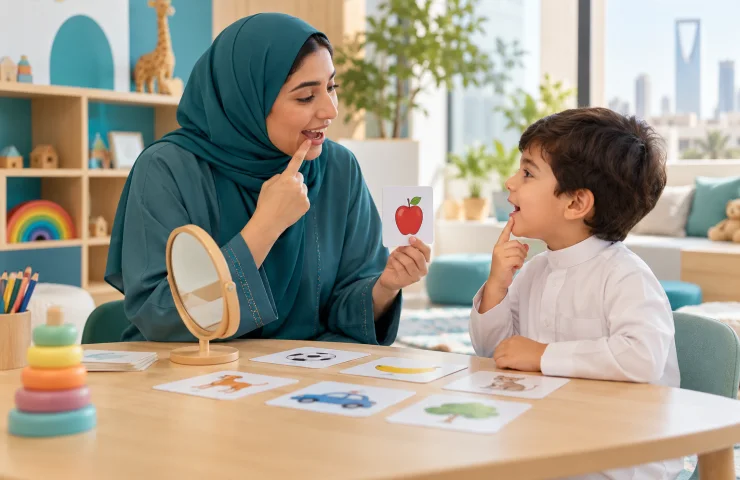

Communication grows through meaningful interaction. Families do not need special equipment or long lessons to support it. Short, enjoyable exchanges during familiar routines can give a child many opportunities to listen, take turns, make choices, and express ideas.
1. Follow your child’s interest
Join what your child is already doing. If they are lining up cars, sit nearby and describe one simple action such as “car goes” or “red car.” Following their focus makes language easier to connect with the moment.
2. Pause and give time
Children often need more time to understand a message and plan a response. After offering a choice or making a comment, pause for several seconds. Look expectantly without pressuring your child to speak. A look, gesture, sound, picture, or word can all be meaningful responses.
3. Offer clear choices
Instead of asking a broad question, show two options: “Apple or banana?” Hold each item where the child can see it. Accept pointing or reaching, then model the word naturally: “Banana. You chose banana.”
4. Add one small step
Respond to what your child communicates and add a little more. If your child says “ball,” you might say “big ball” or “roll the ball.” This provides a useful model without turning the interaction into a test.
5. Create reasons to communicate
Place a favorite item where it is visible but requires help, give a small portion so the child can request more, or pause during a familiar song. Keep these moments playful and respond quickly to any clear attempt to communicate.
6. Use books for connection
You do not need to read every word. Talk about pictures, imitate sounds, point to actions, and let your child turn pages. Repeating favorite books gives children a predictable chance to participate.
7. Model without constant correction
When a child’s message is unclear, respond to the meaning first and provide the correct form naturally. If they say “tar” for “car,” answer, “Yes, car. The car is fast.” This keeps communication successful and encouraging.
When speech therapy may help
Consider professional guidance if your child has difficulty expressing needs, understanding language, being understood, joining conversations, or communicating across settings. A speech-language assessment can identify current strengths and useful support.
Learning Edge provides individualized speech and communication support in Riyadh. Families can book an appointment to discuss their child’s communication needs.